The Toxic Truth: Navigating the Hidden Dangers of Smoke and Fire Damage
Updated: May 21
The Science of Odor and Invisible Toxins
When a fire strikes your home, knowing what to do after a house fire can feel impossible in the immediate aftermath. The relief of seeing the flames extinguished is quickly replaced by an overwhelming sense of uncertainty. One of the most common things we hear from homeowners is the belief that if they can no longer smell the smoke, the danger must be gone. This is a logical thought, but according to the IICRC S700 Standard for Professional Fire and Smoke Damage Restoration, it is a dangerous misconception. Our full guide on cleaning smoke damaged belongings explains exactly why smoke is not a single substance but a complex cocktail of solid particulates, liquid vapors, and toxic gases.
The heavy odor we associate with fire is caused by large particles and volatile organic compounds that our noses can easily detect. However, many of the most hazardous components of smoke, such as carbon monoxide and ultra fine particulates, have no smell at all once the initial cloud clears. Professional restorers identify what is known as set smoke residue. These are particles that have cooled and bonded to the surfaces of your home. While they might not be off gassing enough for you to notice a scent, they still contain concentrated toxins. If you disturb these residues by simply walking across a room or opening a window, you can send those invisible poisons back into the air where they are easily inhaled.

The Deception of a Clean Surface
It is also an unsafe assumption to believe that an object is clean just because it looks and smells fine to your senses. The industry standard for a true clean is the total removal of contaminants to a pre loss condition, which goes far beyond what the human eye can see. Soot particles are incredibly tiny, often measuring between point one and four microns. This means they are completely invisible without specialized equipment. A countertop might look spotless, but it could be covered in millions of microscopic, chemically altered specks. This is why professionals use surface sampling and high intensity lighting to find ghosting, which is the presence of fine soot that masquerades as ordinary household dust.
Using air fresheners or ozone machines to hide the smell is another common mistake. Odor masking is not the same as decontamination. It simply hides the evidence of the problem while leaving the actual toxins in place. To truly protect your family, you have to move past what you can perceive and rely on the science of physical removal and verification.
Health Risks, Cancer Concerns, and Clothing Safety
When we discuss the aftermath of a fire, the conversation must move beyond property damage and focus on the biological impact on the people living inside the structure. The IICRC S700 identifies smoke as a hazardous mixture of solid particulates, liquid aerosols, and toxic gases. The health risks associated with lingering residue are significant and multifaceted. Fine particulate matter is especially dangerous because it is small enough to penetrate deep into the lung tissue and enter the bloodstream directly. Professionals use special respirators to protect them while inside or near the fire hazard. If you don't use the proper equipment , this can lead to immediate respiratory distress, but it also creates a long term health burden as the body struggles to clear these foreign contaminants.
In addition to respiratory issues, there is the very real problem of dermal irritation. Soot is frequently acidic in nature, particularly when household plastics or synthetic materials have burned. Contact with these residues can cause skin rashes or a condition known as soot dermatitis. Furthermore, the presence of volatile organic compounds can lead to sensory sensitization, where individuals experience chronic headaches, nausea, or heightened reactions to other environmental triggers. If these chemical residues are not physically removed from the home, they will continue to react with the natural humidity in the air, creating a corrosive environment that constantly releases toxins into your breathing zone.
Addressing the Threat of Carcinogens
One of the most frequent worries expressed by homeowners is whether smoke residue can cause cancer or other severe illnesses. Professional restoration standards acknowledge that fire debris often contains known carcinogens. When common items like polyurethane foam cushions, treated wood, or electronic devices are consumed by fire, they produce polycyclic aromatic hydrocarbons and dioxins. These are highly stable, toxic compounds that are known to interfere with hormones and are linked to various forms of cancer.

Because these substances are incredibly persistent and do not break down easily on their own, the industry standard focuses on total removal rather than just surface cleaning. If a material is too porous to be fully decontaminated of these microscopic carcinogens, the professional recommendation is almost always to replace the item entirely. This ensures that the long term health risk is eliminated from the environment.
This same logic applies to your wardrobe, especially after a garage fire where oils, rubber, and plastics may have burned. Standard laundry detergents are designed for organic dirt and oils, not for the complex acidic residues of a fire. Even if your clothes smell fresh after a wash, they may still hold microscopic soot that can cause your skin to absorb toxins. For heavy exposure, professional restoration laundering is the only way to ensure the safety of your textiles.
Air Quality, Wildfires, and Equipment Safety
When you are in the middle of a restoration project, you will likely see large machines known as air scrubbers running throughout your home. A common question homeowners ask is whether it is safe to breathe the air normally as long as these devices are operating. According to IICRC standards, an air scrubber is an essential mitigation tool, but it is not an immediate guarantee of safety for the occupants. These machines work by pulling air through high efficiency particulate air filters to capture fine particles and often use charcoal layers to absorb volatile organic compounds. While the machine is actively improving the air that passes through it, it cannot reach the source of the toxins that have already settled on your furniture, floors, and walls.
The safety reality is that if you are moving around the house or beginning to clean, you are likely kicking up settled soot that the air scrubber has not yet processed. For this reason, the industry protocol for high exposure scenarios suggests that technicians wear full personal protective equipment until a post remediation verification proves the environment is clean. Living in a home while scrubbers are running is generally discouraged if the smoke odor concentration remains high, as the air scrubber is only one part of a larger decontamination process. It is a mistake to rely on these machines alone. Professional standards are clear that the primary goal is source removal. If you do not physically wash the walls and vacuum the floors with specialized equipment, the air will simply become contaminated again the moment the machines are turned off.
The Unique Challenge of Wildfire Smoke
Returning home after a wildfire presents a different set of challenges because the smoke often travels long distances and cools before it enters your property. This change in temperature affects how the smoke deposits on your surfaces and inside your building envelope. You should only consider returning to your home after the exterior and interior have been thoroughly inspected. Even if the fire did not reach your street, ash fallout can settle in your attic insulation or your heating and cooling intakes.
Turning on your air conditioning after a wildfire can pull settled ash directly from your ductwork into your living space and your lungs. The IICRC recommends having the entire HVAC system professionally cleaned and performing surface testing for char and ash content before move in. If there is a visible layer of gray ash on any part of the home, it should be professionally addressed. This is especially important for households with sensitive individuals, such as young children, the elderly, or those with existing respiratory conditions who are at a higher risk for complications from even minor smoke exposure.
Salvage, Electronics, and Final Verification
When you are standing in the middle of a smoke damaged room, the most pressing question is often about what can be saved and what must be thrown away. The IICRC categorizes your belongings into three groups based on their porosity and how they react to heat. Porous items are generally considered high risk because they act as a filter for the air in your home. This includes things like mattresses, pillows, box springs, and stuffed animals. Because smoke particulates are driven deep into the core of these items, surface cleaning is rarely enough to remove the internal toxins. In most professional scenarios, the recommendation is to replace these pieces entirely to ensure you are not sleeping on a reservoir of trapped chemicals.
Non porous items like glass, metal, and glazed ceramics are much easier to handle. These materials can almost always be saved through professional degreasing or ultrasonic cleaning because the soot cannot penetrate the surface. Semi porous items, such as solid wood furniture, fall into a middle ground. They can often be restored by thorough cleaning and then resealing the wood with a professional grade finish.
However, if the wood has charred or developed deep heat cracks, the smoke odor may be permanently trapped inside the structure of the piece, making it impossible to fully decontaminate.
The Ticking Clock of Electronic Corrosion
There is a common misconception that if an electronic device still turns on after a fire, it is perfectly fine. While smoke itself may not fry a circuit board the moment it touches it, it creates a ticking clock of damage. Smoke residues contain acidic compounds and conductive soot. If this soot settles on the circuit boards inside your computer, television, or kitchen appliances, it can cause a short circuit the next time the device is powered up. Even if it functions initially, the acidic nature of the residue will slowly eat away at the delicate metal connections over time.
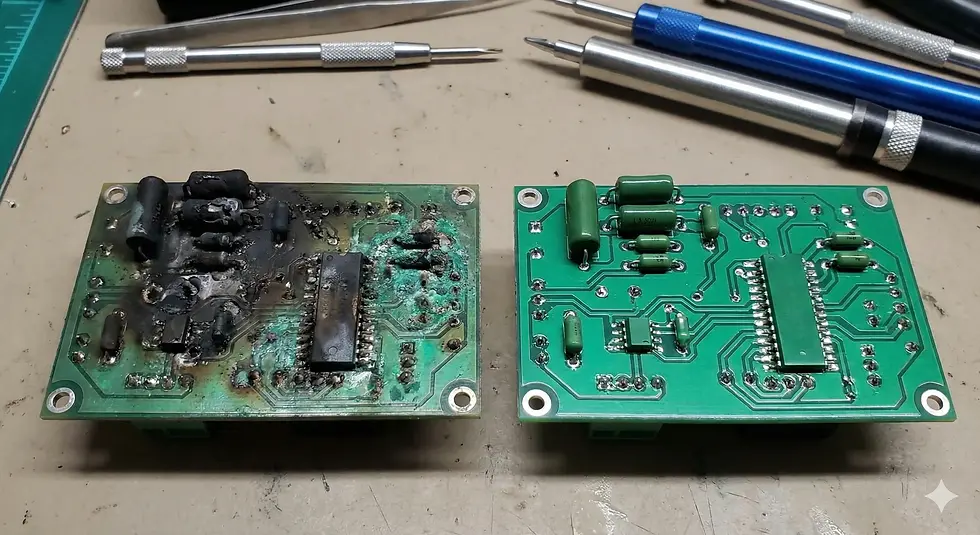
Professional protocols dictate that electronics should never be turned on until they have been cleaned by a technician. This process typically involves using compressed air to blow out loose soot, followed by a cleaning with specialized electronic grade cleaners or high purity isopropyl alcohol to neutralize the acids. By addressing this quickly, you can often save expensive gadgets that would otherwise fail a few months down the line.
Knowing When the House is Officially Clean
The final step in any fire restoration project is verification. The industry does not rely on a simple sniff test to decide when a job is done. A project is only considered complete when it meets specific scientific criteria. First, technicians may use wipe samples to ensure that soot and char concentrations on surfaces have returned to normal background levels. Second, the home must pass an odor verification. This means the house must remain completely odor free for twenty four to forty eight hours after all cleaning equipment and masking agents have been removed. Finally, in severe cases, an industrial hygienist may be brought in to perform air clearance testing. This ensures that the levels of fine particulate matter and volatile organic compounds are safe for long term habitation.
fire and smoke damage restorationoration standards cover the physical recovery of your home, there are always questions that fall outside the scope of the IICRC. Matters regarding whether your insurance policy covers replacement versus cleaning, the legality of staying in a smoky home according to local building codes, or the long term impact on your property value are all questions for your insurance adjuster or a legal professional. By following the science of the IICRC, you can move forward with the confidence that your home is not just appearing clean, but is truly safe for your family to return to.
The Final Verification and Beyond
As you reach the end of the restoration process, it is natural to want to put the experience behind you as quickly as possible. However, the final phase of a fire claim is perhaps the most important for your long term health and property value. This phase is governed by strict scientific protocols that ensure your home is not just superficially clean, but truly decontaminated. The IICRC S700 emphasizes that the project is only complete when the indoor environment has been returned to a state that is safe for all occupants, including those with heightened sensitivities.

The first step in this final stage is the removal of all professional equipment. Once the air scrubbers and hydroxyl generators are turned off, the home must undergo a period of stabilization. This is often referred to as a "sniff test" period, but in a professional context, it is much more rigorous. The home must remain odor free for a minimum of twenty four to forty eight hours without the aid of any masking agents or air filtration. If the smell of smoke returns during this window, it is a clear indicator that a reservoir of soot or charred material was missed during the initial cleaning and must be addressed.
Professional Testing and Documentation
For many homeowners, the ultimate peace of mind comes from data. In significant fire events, it is common practice to bring in an independent third party, such as an industrial hygienist, to perform post remediation verification. This professional will conduct surface wipe sampling and air quality testing to measure the concentrations of fine particulate matter and volatile organic compounds. They compare these results to established safety standards and "background" levels found in unaffected areas. Having a formal report that proves your home meets these standards is an invaluable document, especially if you ever decide to sell your property in the future.
It is important to remember that the restoration professional's job is to follow the science of the IICRC to make the structure safe. However, there are many aspects of a fire loss that fall into the realm of insurance and law rather than restoration science.
Questions about whether your specific policy will pay for a brand new couch versus a deep cleaning, or whether the fire has caused a permanent "stigma" on your home's market value, are conversations that must happen with your insurance adjuster, a public adjuster, or a real estate attorney. By separating the technical restoration from the financial claim, you can ensure that each part of your recovery is handled by the right expert. With the right fire damage restoration team in North Texas and a commitment to these professional standards, you can move back into your home knowing that every invisible threat has been identified and removed.
Download your Ebook to help protect your home. Pick your county: Denton County, Tarrant County, Wise County, Cooke County, Grayson County


Comments