How Do I Know If My House Has Mold?
Updated: Aug 9
If your home has mold, your body usually knows before your eyes do. Musty odors that linger after you run the air conditioning, allergy symptoms that worsen indoors, or pets that avoid a specific room are often the first signals. In North Texas, where summer humidity and spring storm season create near-perfect conditions for mold growth inside walls, under flooring, and above ceiling tiles, knowing what to look for before you see visible black spots is the difference between a remediation job and a full gut renovation. Here is exactly what to check.
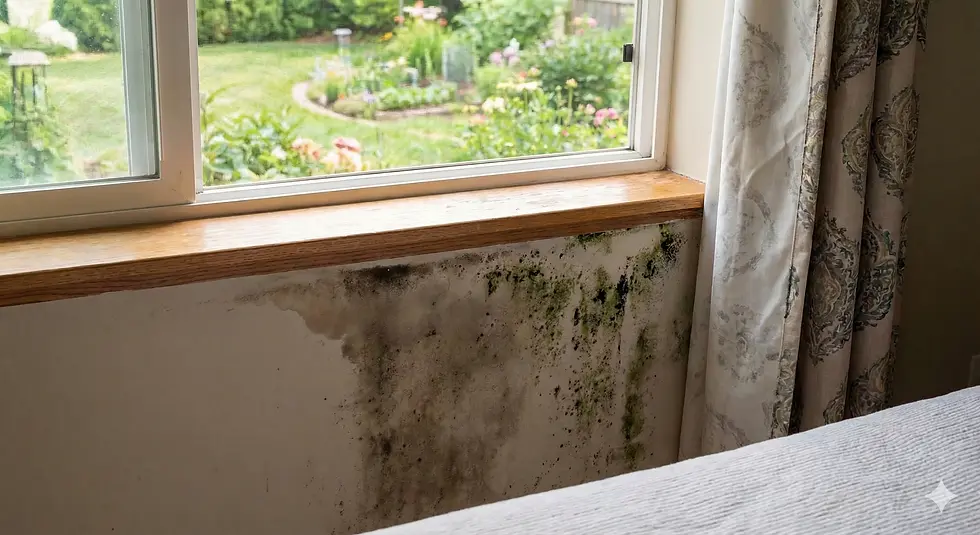
The standard for the restoration industry is known as the IICRC S520. This document outlines three specific conditions that help professionals like myself categorize the level of fungal growth in a home. Condition one is what we consider a normal fungal ecology. This means your indoor environment reflects the natural world outside with no unusual concentrations of spores. Condition two involves settled spores that have dispersed from a growth area but have not yet taken root. Condition three is the most serious because it represents actual growth, whether that growth is visible on the surface of your drywall or hidden deep behind your baseboards. Most people wait until they see a dark patch to take action, but by then, you have already moved into a condition three scenario that is much harder and more expensive to resolve.
One of the most effective ways to spot a problem before it is visible is to pay attention to what I call biological alarms. Your pets are often the first members of the household to react to a mold issue. Because cats and dogs are smaller and breathe faster than humans, they are more sensitive to changes in air quality. Furthermore, they spend a significant amount of time near the floor or in corners where mold spores tend to settle. If you notice your pet suddenly engaging in excessive grooming or itching when they do not have fleas, they may be reacting to allergens trapped in the carpet or floorboards. Cats especially might start showing hide and seek behavior by tucking themselves away in closets or under furniture. This is often a sign that they are trying to avoid air that feels heavy or irritating. You might even see mood shifts or neurological responses to mycotoxins, such as unexplained anxiety or irritability. Even physical quirks like a reverse sneeze in a dog or a sudden disinterest in playing can be a signal that your indoor environment has shifted.
Human health is another critical biological alarm. Many people in North Texas dismiss their symptoms as standard allergies or the infamous Cedar Fever. However, mold exposure has a very specific pattern that differentiates it from a seasonal cold. If your symptoms improve significantly when you leave the house and return when you walk through the front door, your home is likely the source of the irritation. Respiratory signs like a persistent dry cough or nasal congestion are very common because spores are so easily inhaled. More severe exposure can lead to chronic fatigue and what many describe as brain fog. This mental sluggishness and difficulty concentrating are often linked to long term exposure to mycotoxins. You might also notice skin irritations like red or itchy patches that resemble eczema but do not respond to standard treatments. In some cases, toxic molds like Stachybotrys can even cause a stinging or burning sensation on the skin.
It is also important to address a major misconception about new construction in areas like Justin. We are seeing a massive boom in residential development, and many buyers assume that a new home is immune to mold. In reality, the rapid pace of development in the Alliance corridor can actually create mold traps. To meet energy efficiency standards, modern homes are built to be very tight, with little or no gaps. While this helps with your electric bill, it means the house does not breathe as well as older homes. If a builder takes a shortcut, such as venting a bathroom exhaust fan directly into the attic instead of through the roof, they are pumping concentrated moisture into a dark and enclosed space. This is a perfect recipe for mold growth on rafters and insulation.
Mold signs in North Texas homes are often rooted in construction issues that get overlooked. One common problem is the installation of oversized HVAC units. If a cooling system is too powerful for the square footage of the home, it will cool the air down very quickly and then shut off. The problem is that the unit needs to run for a certain amount of time to effectively dehumidify the air. When it short cycles, the indoor environment stays damp, and moisture can condense inside the attic ductwork. We also see framing lumber that gets soaked during a heavy North Texas rain and is then immediately covered with house wrap and drywall before it has reached a safe moisture content. This traps moisture inside the wall cavity from day one. Materials like oriented strand board, which is standard in new builds, are much more sensitive to moisture than traditional plywood. Once this wood gets wet, it stays wet longer and provides a rich food source for mold colonies.
The way a homeowner handles a leak in the first forty eight hours is the single most important factor in whether or not they end up with a mold problem. I have seen countless cases where a homeowner truly believed they had conquered a leak with a few towels and a desk fan. They mop up the puddle and go about their day, unaware of the wicking process. Water follows the path of least resistance and will climb up the back of your sheetrock and into the insulation where you cannot see it. I recently saw a home in Justin where the owner tried to dry out a window leak themselves from a gap in the seal. A few days later, they could see mold blooming on the outside of the sheetrock. If they had called a professional to perform a moisture map on the first day, the dry out would have been simple and relatively inexpensive. Instead, they ended up with a seven thousand dollar remediation project because the mold had already reached the structural studs.

The financial risk goes beyond just the cost of repairs. There is a significant insurance nightmare associated with DIY drying efforts. Insurance policies are generally designed to cover damage that is sudden and accidental. However, every policy also includes a requirement for the homeowner to mitigate the damage. If an insurance adjuster determines that you tried to fix the problem yourself and failed, they can label the resulting mold as a maintenance issue or negligence. In many cases, the insurance company will refuse to pay for the mold damage because it was caused by the homeowner not following professional drying protocols. This leaves the family on the hook for a massive bill that could have been avoided by simply having a professional document the moisture levels from the start.
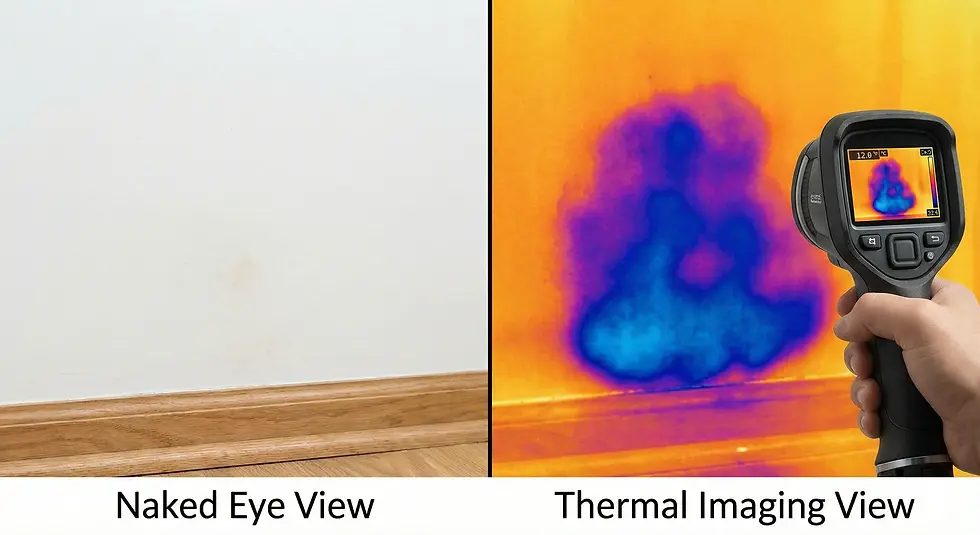
Professional inspectors use tools that the naked eye simply cannot compete with. We use thermal imaging cameras to find cold spots behind walls, which almost always indicate trapped moisture. We also use moisture meters to identify if framing wood or drywall is holding onto water that should have evaporated. These tools allow us to find the source of the problem before the biological alarms even start going off. According to IICRC standards, if you suspect a shortcut was taken during the construction of your home or if you smell a musty odor you cannot find, you should seek a condition assessment from a professional.

Protecting your home in the North Texas climate requires a shift from being reactive to being proactive. It means understanding that the golden window for prevention is only twenty four to forty eight hours long. It involves watching your pets for behavioral changes and listening to your own body when you feel congested or fatigued for no apparent reason. It also means recognizing that even a brand new home in a beautiful Justin neighborhood can have hidden structural flaws or gaps that invite moisture. If you need a mold inspection in North Texas, do not wait for the visible signs to appear. Mold is not just a cosmetic issue or a sign of a dirty house. It is a biological response to an environment that is out of balance. By paying attention to these physical indicators and structural traps, you can protect the health of your family and the value of your property. At that point, the mold has already won the first round. Instead, use the tools and knowledge available to you to ensure your home remains a safe and dry sanctuary from the unpredictable North Texas weather. Frequently Asked Questions About Mold in North Texas Homes
What does mold smell like in a house? Mold has a distinct musty or earthy odor that many describe as similar to wet cardboard or a damp basement. In North Texas homes the smell is often strongest near air vents, in closets along exterior walls, or in bathrooms with poor ventilation. If the smell is stronger when your air conditioning runs, spores may have settled inside your ductwork.
Can mold grow inside walls without being visible? Yes. This is the most common scenario in North Texas homes. Water wicks up behind sheetrock and into insulation where it cannot be seen. A professional moisture meter or thermal imaging camera can detect trapped moisture and mold growth inside wall cavities long before any visible signs appear on the surface.
Is mold in a new construction home possible? Yes and it is more common than most buyers expect. Rapid development in areas like Justin and the Alliance corridor means framing lumber is often covered before reaching safe moisture content. Oversized HVAC units that short cycle leave indoor air damp. Bathroom exhaust fans vented into attics rather than through the roof pump moisture directly into enclosed spaces. A new home is not immune to mold.
Will my insurance cover mold remediation? It depends on the cause and how quickly you responded. Insurance policies generally cover sudden and accidental water damage but require the homeowner to mitigate damage promptly. If an adjuster determines you attempted DIY drying and failed, the resulting mold can be classified as a maintenance issue or negligence — and denied. Professional documentation of moisture levels from day one protects your claim.
Resources:
EPA Mold Guide: https://www.epa.gov/mold
Texas Department of Insurance: https://www.tdi.texas.gov/pubs/consumer/cb020.html
Denton County Emergency Management: https://www.dentoncounty.gov/266/Emergency-Management
Texas A&M AgriLife: https://agrilifeextension.tamu.edu
Download your Ebook to help protect your home. Pick your county: Denton County, Tarrant County, Wise County, Cooke County, Grayson County


Comments