How to Protect Your North Texas Home from Water Damage
Updated: May 20
Living in North Texas for as many years as I have, I have learned that the word flood means something very different to a local homeowner than it does to someone watching the evening news in another part of the country. Knowing how to prevent water damage in my home is a question every North Texas homeowner should be asking before the next storm arrives. In our neck of the woods, water damage is usually much more subtle, much more sudden, and often comes from places you would never expect. Over my career, I have earned numerous certifications and spent thousands of hours on job sites alongside my experienced crew. What we have discovered is that the average person is looking for a puddle when they should be looking for a vapor, and they are worried about a river when they should be worried about their own air conditioning unit.
One of the biggest hurdles in protecting a home is the misconception that if you do not see standing water, you do not have a problem. This is where the science of restoration comes into play. Most people are surprised to learn about a concept called vapor migration. This is essentially the invisible entry of moisture into your home. Water is not just a liquid that sits on the floor; it is a gas that travels through your drywall, your insulation, and your structural wood. When the humidity inside a house climbs above sixty percent, you have entered a danger zone. At this level, moisture vapor begins to saturate porous materials from the inside out. This leads to structural rot and what we call condition two mold, which refers to settled spores that have found a hospitable place to land. You might not see a single drop of liquid, but your house is effectively under attack.
To truly harden your home against this kind of damage, you have to start thinking like a restoration professional. Protection begins outside the four walls of your house. One of the most effective things you can do costs less than twenty dollars at a local hardware store, and that is installing downspout extensions. In my line of work, we are constantly fighting against what we call bulk water. When rain hits your roof, it is channeled into gutters and then downspouts. If those downspouts dump that water right at the base of your foundation, you are asking for a catastrophe. That water pools against the exterior, creating immense hydrostatic pressure. Eventually, that pressure forces the water through foundation cracks or into crawlspaces. This water is often category three, or what we call black water, because it has picked up contaminants from the soil. By simply adding a ten foot extension to your downspouts, you move that threat away from the structure and save yourself thousands of dollars in foundation repair and water mitigation.

The landscape itself plays a massive role in whether your home stays dry. I remember a specific case in Paradise, Texas, that serves as a perfect cautionary tale. This homeowner was diligent. They had lived in their house for twenty five years and had a drainage swale in the front yard that had worked perfectly for a quarter of a century. The land was sloped toward the house, but that small trench caught the runoff and diverted it safely around the sides. However, nature does not always follow the historical average. We had a storm hit that dumped an incredible amount of rain in a very short window of time. The volume of water simply overwhelmed the swale. It rose faster than it could drain, filled up the front porch, and eventually crossed the threshold into the home.
This taught me that water damage prevention in North Texas requires more than a system that is just good enough for the average storm. You need what I call a fortress approach. This means ensuring you have a positive pitch, where the ground clearly slopes away from the house in every direction. If you use a swale, it should be lined with a non porous material like clay or a synthetic liner. This ensures the water actually moves along the channel rather than just sinking into the soil right next to your foundation. In North Texas, our soil can only absorb so much before it becomes a saturated sponge pushing against your home.
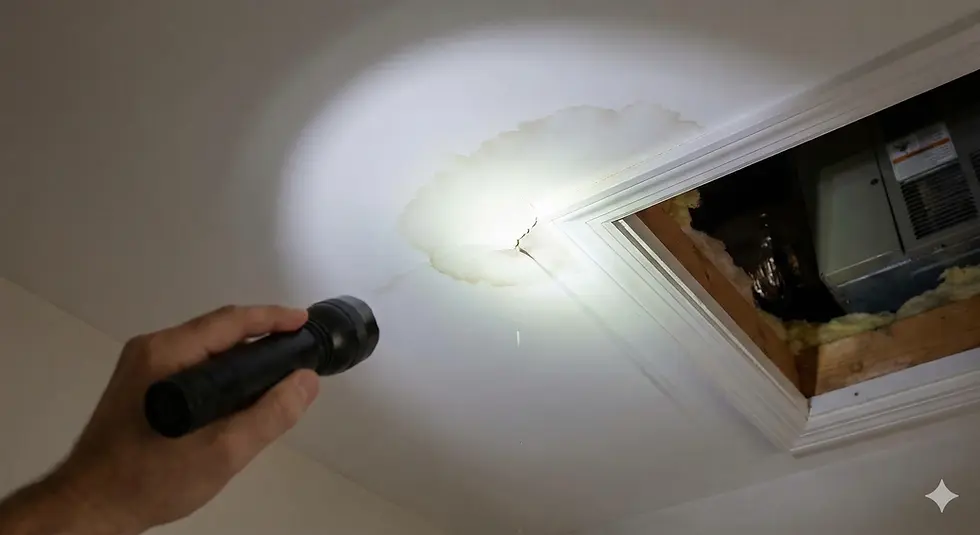
While exterior drainage is vital, many of the calls my team and I respond to are actually caused by mechanical failures inside the house. Because of our heat, air conditioning units in Texas work overtime. We see countless homes damaged because a simple condensation pipe became stopped up. When that happens, the water has nowhere to go but into your ceiling or your floorboards. This is where technology becomes your best friend. I always recommend that homeowners install smart leak sensors in high risk areas like the HVAC closet, under sinks, and near the water heater. These devices provide the early detection required to keep a clean water leak from sitting long enough to degrade into a grossly unsanitary situation. In the restoration world, time is the variable that determines whether we can save your materials or if we have to tear them out.

Wind driven rain happens and water does get in, the biggest mistake I see people make is trying to handle the drying process themselves with standard household tools. There is a dangerous myth that you can just put a box fan on a wet spot and call it a day. From a professional standpoint, that is one of the worst things you can do. A household fan simply moves wet air around the room. This increases the evaporative load, which means the moisture that was in the carpet is now in the air, looking for a new place to land. This leads to secondary damage, such as warped wooden furniture or mold growing on the ceiling in a room that was never even touched by the initial leak.
When my crew enters a home, we use a tactic called rapid structural drying. We do not just use fans; we use centrifugal air movers in combination with low grain refrigerant dehumidifiers. These machines are designed to pull moisture out of the air and, more importantly, out of the deep structure like the wooden studs and sill plates. We generally have a window of twenty four to forty eight hours before mold begins to germinate. Using science to control the environment is the only way to ensure the home is actually dry.
This leads to the most common cleanup error: the mold sandwich. Many people are in such a hurry to get their lives back to normal that they replace the drywall or the flooring as soon as the surface feels dry to the touch. This is a recipe for disaster. Just because the surface is dry does not mean the internal framing has reached its proper dry standard. If you hang new drywall over a wooden stud that still has a twenty percent moisture content, you are sealing that moisture in. You have effectively created a mold sandwich that will lead to permanent structural rot hidden behind a beautiful new coat of paint. We never sign off on a job until we have verified the moisture levels with professional meters.
Before a storm even appears on the radar, there is one non physical step every homeowner should take. You need to create a digital photo or video inventory of every single room in your house. Open your closets and your cabinets. In my experience, these records are invaluable when it comes to a loss. We use these images to determine if an item is restorable or non restorable based on its condition before the water hit. Having this documentation makes the insurance process much smoother and ensures you are fairly compensated for what was lost.
My personal philosophy, and the one I train my employees to follow, is that we should always aim to restore rather than replace. The best way to protect your North Texas home from water damage is to treat water with the respect it deserves before it ever crosses your threshold. We use the science of drying to save as much of the original home as possible and return your indoor environment to a normal, healthy state where the air is safe to breathe and the structure is sound. By focusing on the hidden threats and moving water away from your foundation, you can protect your investment for years to come. Act quickly when it goes where it shouldn't, and you can keep a small incident from becoming a total loss.
Download your Ebook to help protect your home. Pick your county: Denton County, Tarrant County, Wise County, Cooke County, Grayson County



Comments