Weather-Related Home Maintenance: What North Texans Need
Updated: Jun 30
North Texas doesn't get a mild season. You get 100-degree summers that wear out HVAC systems and roofs, spring storms that bring hail and tornadoes, and winters that look harmless right up until a blue norther drops the temperature 40 degrees in an afternoon and bursts whatever pipe you forgot to wrap. A maintenance calendar built for a place with one predictable season just doesn't hold up here. One built around what this region actually throws at you does.

Why North Texas Is Different
Most home maintenance guides assume a normal seasonal cycle: cold winter, mild spring, warm summer, cool fall. That's not what happens here. Tarrant County has logged 126 severe hail days since 2000, second in the state only to Amarillo's Potter County. Texas as a whole saw 878 major hail events in 2024, and the May 2024 North Texas storm alone caused an estimated $2.3 billion in damage, according to data the Insurance Institute for
Business and Home Safety pulled from the NOAA Storm Prediction Center.
That changes what "seasonal maintenance" even means around here. A roof inspection in Dallas-Fort Worth isn't something you do once a decade, it's an annual check against a climate that produces hail most years and, every so often, a freeze hard enough to burst pipes overnight. Homeowners across North Texas are managing two extremes, sometimes in the same month.
Spring: Storm Season Prep
Spring runs late February through May here, and it's the highest-risk window for hail, straight-line wind, and tornadoes. This is about structural readiness, not raking leaves.
Start on the roof. Walk the perimeter and look for shingles that are curling, cracked, or shedding granules. That's the kind of wear hail finds and exploits. If you can't safely check it yourself, a licensed inspector working to ANSI/IICRC guidance can spot damage you'd never see from the ground.

Clear your gutters and downspouts before the first big storm hits. A clogged gutter sends water straight down the foundation instead of away from it, and that's one of the more preventable causes of foundation movement in this clay soil. While you're up there, make sure downspouts extend at least four feet out.
What to Check Before Storm Season Really Gets Going
Trim any branches within 10 feet of the roofline, since wind-driven limbs are a common source of shingle and gutter damage in spring storms
Run your sump pump through a full cycle with an actual bucket of water rather than just listening for the motor
Check window and door seals for gaps, since spring storms test weatherproofing in ways winter rarely does
Walk the yard looking for low spots that would funnel water toward the foundation during heavy rain
Termites wake up as the soil warms too, so spring's also the time to check exterior wood and any spots where wood touches soil around the house.
Summer: The HVAC System Takes the Hit
Once temperatures settle into the high 90s and 100s, the weak point shifts from the roof to the air conditioner. A unit running almost nonstop for four months needs more than a fresh filter to make it to September.
Get your HVAC tune-up done before peak summer, not during it. Technicians get slammed once the heat sets in, and a unit that dies in July can mean days without cooling while you wait for a repair slot. Swap filters every 30 to 60 days during the worst of it. A clogged filter just makes the system work harder, and that shortens its life.
Seal up gaps around windows and doors with weatherstripping or caulk. Air leaks drive up your cooling bill and let humidity in, and that's exactly the moisture mold needs to get started in wall cavities and attics.
Pull landscaping back from exterior walls and the HVAC condenser. Overgrown plants block airflow around the unit, and branches hanging too close become a hazard once the pop-up summer storms roll through.
Fall: The Short Window That Matters Most
Fall doesn't last long here, but it's your real shot at getting mechanical systems ready before winter shows up, sometimes without much warning.
Get the heating system serviced before the first cold snap. A furnace that hasn't run since last winter can develop problems that only show up under load, and you don't want to find that out on the coldest night of the year. If you've got a fireplace, get the chimney professionally cleaned and inspected. Creosote buildup is still a leading cause of house fires, which is exactly why ANSI/IICRC S700 standards for fire and smoke restoration exist.
Before the first hard freeze, disconnect your garden hoses, drain outdoor faucets, and shut off any exterior water connections that aren't freeze-rated. That single step heads off one of the most common, and most expensive, winter claims around here: a burst hose bib flooding a wall overnight.

Winter: Freeze Protection Isn't Optional
Winters here are mild most of the time, which is exactly why so many homes get caught off guard when a real freeze hits. Pipes in attics, garages, and exterior walls need insulation before the first hard freeze, not after a forecast mentions one.
Wrap exposed pipes in foam sleeves, especially anything on exterior walls or in the garage. During a hard freeze, let faucets drip and open the cabinet doors under sinks on exterior walls so warm air can get to the plumbing.
If snow or ice shows up, keep an eye on your roofline for ice dams. They form when heat escaping the attic melts snow that refreezes at the eaves, and they push water back up under the shingles. That kind of damage often doesn't surface until spring.
A Case from Haslet
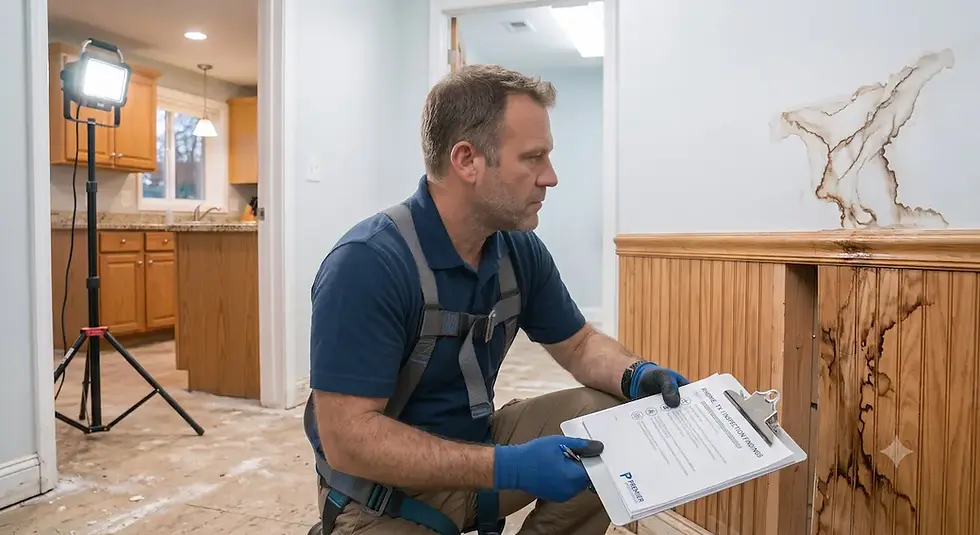
We worked with a homeowner in Haslet whose upstairs guest bathroom had been leaking slowly behind the wall for almost three weeks before anyone noticed. It traced back to a hairline crack in a supply line that had frozen and partially split during a February cold snap the year before, then finally gave out under normal water pressure months later. By the time it was caught, the leak had soaked through to the kitchen ceiling below, and what looked at first like a small water stain turned out to mean the drywall had to come down on both floors.
Moisture readings showed the insulation had been wet long enough for mold to take hold. A five-minute pipe check during fall maintenance would have caught it before a hairline crack ever became a two-floor repair.
Structural Upgrades Worth the Money
Routine maintenance protects what you've got. A few structural upgrades change how much damage a storm can do in the first place.
Impact-resistant shingles rated under IBHS hail guidelines are probably the highest-value upgrade available here, given how often this region gets hit. Storm shutters or wind-rated entry doors cut the risk of wind getting inside during straight-line wind events or tornado warnings, and wind intrusion is what makes roof and wall failure much more likely.
Native Texas landscaping helps more than people expect. Plants suited to both drought and heavy rain hold soil better than non-native turf, which cuts down on the erosion and shifting that contributes to foundation problems. Combine that with proper grading so water moves away from the house instead of toward it.
Key Takeaways
North Texas needs a four-season maintenance plan built around hail, heat, and hard freezes, not a generic national checklist
The highest-value window for roof and gutter work is spring, before hail season peaks, not whenever you happen to think of it
HVAC repair slots disappear fast once summer heat sets in, so schedule service before the system is under real strain
Wrapping pipes and letting faucets drip during a hard freeze costs almost nothing and prevents the most expensive winter claims in this region
Structural upgrades like impact-resistant shingles and proper grading reduce damage before a storm hits, which routine maintenance alone cannot do
Frequently Asked Questions
How often should I get my roof inspected in North Texas?
At least once a year, timed for late winter or very early spring before storm season ramps up, plus a follow-up inspection any time a major hail event hits your area, even if you can't spot damage from the ground. Granule loss and cracked shingles are often only visible up close.
What temperature puts pipes at risk of freezing here?
Pipes in unheated or exterior-facing spaces start being at risk once temperatures drop below 20°F for several hours straight. That threshold is why insulating pipes ahead of the first hard freeze each year matters more than reacting once a forecast warns you it's coming.
Is seasonal maintenance actually worth doing?
Yes, and the math is not close. A pipe insulation kit or HVAC tune-up runs a fraction of what a burst pipe, a dead AC unit mid-summer, or an undetected roof leak costs to fix, and nearly all of those failures are preventable with routine seasonal attention.
Sources and References
ANSI/IICRC S700 Standard for Professional Fire and Smoke Damage Restoration — https://www.iicrc.org/standards
IBHS Hail and Wind Resistance Guidance — https://ibhs.org/hail/
IBHS compiled from NOAA Storm Prediction Center data — North Texas hail and storm statistics


I loved your Ebook! Thank you for writing it!