Is Black Mold Dangerous? What North Texas Homeowners Should Actually Know
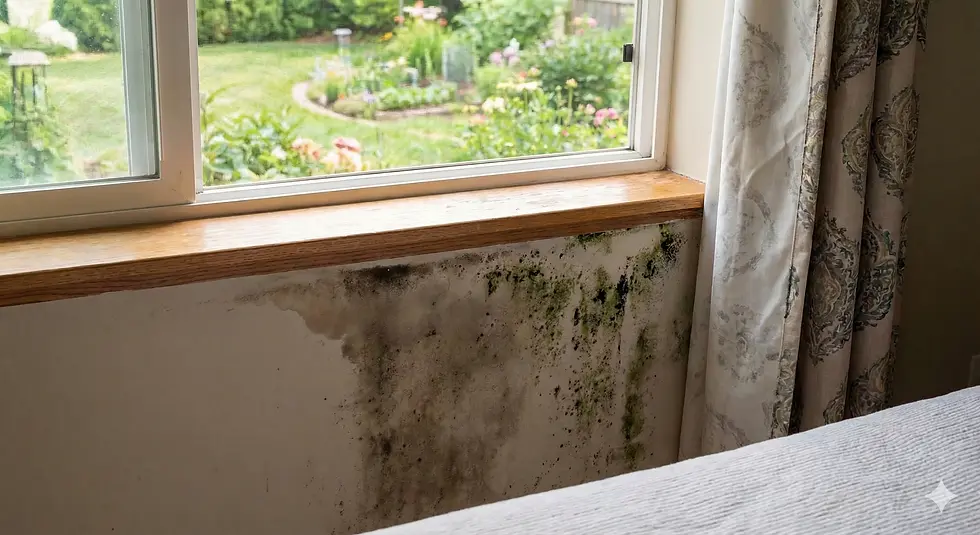
Is black mold dangerous? The honest answer is yes, but probably not for the reason you have heard. We got a call from a homeowner named Denise in Denton. She had found a dark stain spreading across her bathroom ceiling. The night before, she had read about "toxic black mold" online and got scared it might be the dangerous kind. But she also figured that if it turned out to be an ordinary mold instead, she would not need to worry about it at all. Both ideas missed the real issue. What mattered was not which mold she had. What mattered was that it had been growing behind that tile for who knows how long, and it needed to come out.

That mix-up happens constantly. Wherever you land on the bigger debates about mold and long-term illness, the risks researchers already agree on are serious enough on their own. They are reason enough to act fast on any mold problem: worsened asthma, respiratory symptoms, a higher risk of new asthma in children, and added danger for elderly residents and anyone who is immunocompromised. You do not need to identify the species growing in your bathroom to know it needs to go.
Why North Texas Is Different
North Texas does not get a break from moisture the way drier parts of the country do. The National Weather Service Fort Worth office calls the region's climate humid subtropical. Gulf moisture keeps summer humidity high even when the sky is clear. Daytime highs sit in the 90s and 100s from June through August, and on many nights the temperature never drops below 80 degrees. That mix, heat that never fully breaks and humidity that never fully lifts, is close to ideal for mold growth. It lasts for months, not weeks.
It also means North Texas homes run air conditioning nearly year-round, and that creates its own moisture problems. It is a common hidden cause of mold homeowners never see coming. Condensation lines clog. Attics stay warm and damp above insulation. Closed-up homes get less of the natural air exchange that keeps indoor humidity in check. None of this requires a leak or a flood. A poorly ventilated closet or a slow condensate drip can create the same conditions mold needs, quietly, for weeks before anyone notices.
What the Research Actually Supports
Set aside the bigger disagreements about mold and long-term illness for a moment. There is a well-established body of research on what indoor dampness and mold do to respiratory health, and it does not require settling every open question to be useful. Reviews from the World Health Organization and the National Academies' Institute of Medicine both found consistent evidence. Indoor dampness and mold exposure are linked to upper respiratory symptoms, ongoing cough, wheezing, and worse asthma symptoms in people who already have asthma or allergies.
A more recent finding matters even more for families without an existing diagnosis. A 2024 meta-analysis pooled data across more than thirty case-control and cohort studies. It found that children living in moldy homes were more likely to develop asthma in the first place, not just have more flare-ups of asthma they already had. The increase in risk ranged from roughly 15 percent in the more rigorous cohort studies to over 50 percent in case-control studies.
You Do Not Have to See Mold for It to Be a Problem
One finding matters a lot for older homes and closed-up spaces. Research on older adults in social housing found that a musty smell alone, with no visible mold growth, was linked to higher asthma risk. Smell can be an earlier warning sign than sight. This is especially true in attics, behind cabinets, or inside HVAC closets, where mold can grow out of view for a long time before it becomes visible.

These risks fall hardest on specific groups. Children, elderly residents, and anyone who is immunocompromised face a higher chance of real health effects from mold exposure than a healthy adult would. That is reason enough on its own to treat any mold problem as something to fix promptly, no matter where you land on the more contested questions still being studied.
Why You Cannot Identify Mold by Looking At It
It is natural to want to know exactly what you are dealing with. But color is a poor guide. How to tell if you have mold has more to do with moisture and smell than with what it looks like. Mold that looks black can turn out to be one of many common, ordinary species. Mold that makes the compounds tied to more serious concern is not always black or even dark in color. Looking at it cannot reliably tell you which species you have. Guessing based on how it looks can lead in either direction: thinking a problem is worse than it is, or thinking it is not worth addressing because it does not look alarming.
Neither guess helps, because the actual response does not change based on species. Whether the growth in your bathroom or attic turns out to be a common household mold or something researchers take more seriously, the next step is the same. Find where the moisture is coming from. Remove the affected material. Stop the source so it cannot return. Lab testing to identify species has a place, particularly in disputes, health investigations, or insurance documentation. But it is not what determines whether a homeowner should act. Any active mold growth is what determines that.
How Certified Remediation Professionals Actually Assess and Respond to Mold
Restoration professionals do not start a mold job by trying to figure out the species growing on a wall. Technicians certified through the IICRC's Applied Microbial Remediation Technician program train on the ANSI/IICRC S520 Standard. This standard governs how mold remediation is assessed and performed across the industry. That training centers on scoping the contamination itself: how much moisture is present, how long the area has likely been affected, and how much material has been hit. Species identification is not what decides how a job is scoped.
It helps to be clear about where a remediator's job actually starts and stops. The S520 standard puts the remediation work itself, risk assessment, containment, removal, and post-remediation verification, on the remediator. Formally finding and fixing the underlying cause of the moisture, a leaking pipe, poor grading, a failing HVAC part, falls under the standard as the property owner's job. Many owners choose to have their remediation company or another professional handle that piece too. In practice, a good remediator will point to the likely source while assessing the job. But permanently fixing that source is a separate task from the mold removal itself.

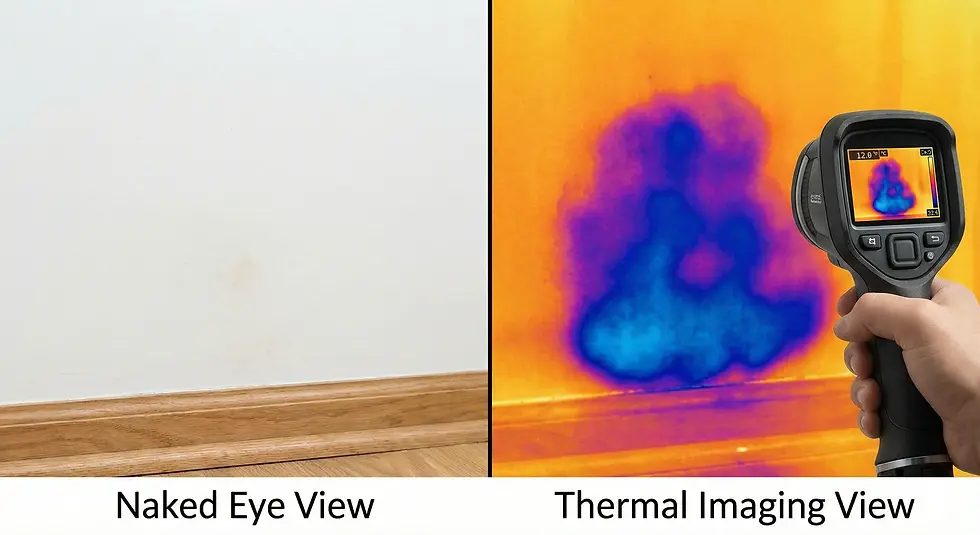
A proper assessment starts with a visual inspection and moisture mapping to trace where water is getting in or building up, not a swab test sent off to a lab. Containment gets set up next, to keep spores from spreading to unaffected areas during the work, using barriers and negative air pressure where needed. Remediation itself usually means removing the affected material, HEPA vacuuming to capture spores, and treating the area. A post-remediation evaluation confirms the job actually worked before it is considered done.
Why Testing Usually Is Not the First Step
Homeowners often expect mold testing, meaning lab identification of the species present, to be the starting point. But that kind of testing sits outside the standard remediation process. It is typically brought in separately, through an independent indoor environmental professional, for specific situations: documenting a health-related concern, resolving a dispute, or confirming a remediation worked after the fact. For most active mold problems, the visible growth and the moisture source behind it already tell a technician everything needed to start the work. Waiting on lab results before addressing a known moisture problem only gives the mold more time to spread.
In Texas, that separation is not optional. Under the Texas Mold Assessment and Remediation Rules, Texas Occupations Code Section 1958.155, the same company cannot act as both the mold assessor and the mold remediator on the same project. A licensed Mold Assessment Consultant has to be an independent party from the Mold Remediation Contractor doing the removal work. Texas even bars one person or entity from owning an interest in both companies on the same job. The rule exists to stop an obvious conflict of interest: a company should not be able to find, or exaggerate, a problem during testing and then sell the fix. It came out of a real case, Ballard v. State Farm, that exposed exactly that pattern across the industry.
What This Means for Your Home
Whether the mold in your home turns out to be a common, ordinary species or something researchers are still studying, the response does not change. Any active mold growth means there is a moisture problem that needs to be found and fixed. The longer that takes, the more time mold has to spread, and the more the risks discussed here, worsened asthma, respiratory symptoms, and added danger for children, elderly residents, and anyone immunocompromised, have to build up.

Keep in mind that bleach is not always effective on porous materials, so wiping down a surface is not always the end of the job. A licensed remediation contractor can assess the scope of the problem and remove it properly. If species identification or documentation is ever needed, that is a separate, independent step under Texas law, not something to wait on before addressing what is already growing in your home.
Key Takeaways
Whether mold in your home is a common species or a more concerning one, the response is the same: find the moisture source and remove the growth.
Well-established research links indoor mold and dampness to worsened asthma, respiratory symptoms, and a higher risk of children developing asthma for the first time.
Children, elderly residents, and anyone immunocompromised face added risk from mold exposure and warrant faster action.
Certified remediation technicians are trained to assess mold based on moisture and scope, not species identification, and species testing is not a standard part of the remediation process.
In Texas, mold assessment and mold remediation must legally be handled by separate, independent companies to prevent conflicts of interest.
Frequently Asked Questions
Is black mold more dangerous than other types of mold?
Some mold species, including the one commonly called black mold, can produce compounds that are demonstrably toxic in laboratory studies. Because color alone cannot reliably identify which species is present, and because the appropriate response does not change based on species anyway, any active mold growth should be treated as something to remove promptly rather than something to visually diagnose.
Can I test for mold myself before calling a remediation company?
Homeowners can purchase DIY testing kits, but the results are difficult to interpret without professional context, and Texas law requires an independent, licensed Mold Assessment Consultant, separate from any remediation contractor, to perform mold assessments in most situations. If documentation or species identification is needed, that step should go through a licensed independent assessor.
Will my homeowners insurance cover mold remediation?
Coverage depends on the cause. Many Texas policies cover mold that results from a sudden, accidental event, such as a burst pipe, but exclude mold caused by long-term neglect or unaddressed maintenance issues. Reviewing the policy language and documenting when the moisture source began is important for any claim.
How long does it take for mold to start growing after water damage?
Mold can begin growing within 24 to 48 hours of a surface staying wet, which is why addressing water damage quickly matters as much for mold prevention as it does for structural drying.
Sources and References
World Health Organization -- WHO Guidelines for Indoor Air Quality: Dampness and Mould (2009)
Varga MK, Moshammer H, Atanyazova O -- Childhood asthma and mould in homes: A meta-analysis, Wiener Klinische Wochenschrift (2024)
Moses L, Morrissey K, Sharpe RA, Taylor T -- Exposure to Indoor Mouldy Odour Increases the Risk of Asthma in Older Adults Living in Social Housing, International Journal of Environmental Research and Public Health (2019)
ANSI/IICRC S520 Standard for Professional Mold Remediation (4th ed., 2024)
U.S. EPA -- Mold Guidance and Indoor Air Quality
Texas Occupations Code Section 1958.155 -- Conflict of Interest; Disclosure Required (Mold Assessors and Remediators)
Download your free homeowner preparedness guide for your county:

Comments